
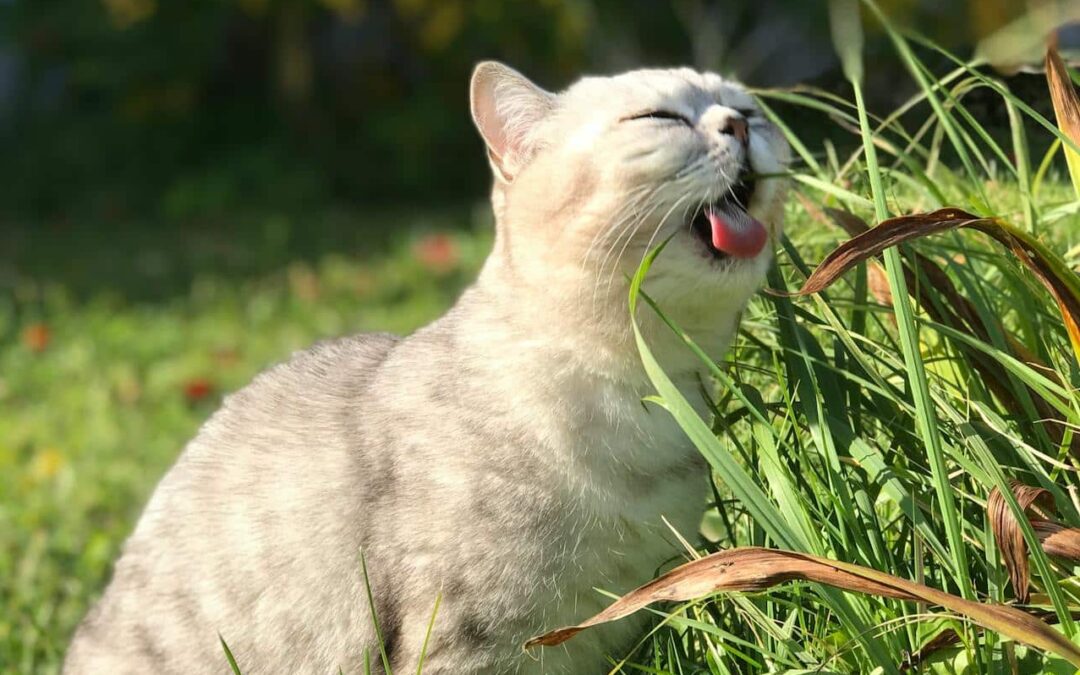
Have you ever caught your cat sneaking outside to nibble on grass and wondered what the appeal is? To us, eating grass or chomping on houseplants is strange, but for cats it’s actually very normal behavior.
There are actually a few reasons behind this quirky habit, and while most of them are harmless and instinctive, it’s still something to keep an eye on. Here’s a look at what might be going on, and when grass-eating can become a concern.
Top 3 Reasons Why Cats Eat Grass
1. It helps settle an upset stomach.
Grass contains fiber, which can help move stomach contents through their system. You might even notice that your cat vomits after eating grass, and that’s perfectly normal. For many cats, grass is like a reset button when their stomachs feel a little off.
2. It can bring up hairballs.
Cats can swallow a lot of fur while grooming, and sometimes that hair doesn’t pass easily on its own. Eating grass can irritate the stomach just enough to trigger vomiting, helping your cat get rid of a stubborn hairball.
3. They enjoy it!
Some cats just like the texture of grass. If your cat is one that likes to chew on houseplants, blinds, cords, etc, grass might just be another interesting thing for them to play with.
Is It Safe for Cats to Eat Grass?
Most outdoor grass is harmless for cats, but not all of it is safe. Try to avoid letting your cat nibble on:
- Grass treated with pesticides
- Fertilized lawns
- Grass that could be contaminated by other animals
If your cat has access to untreated outdoor grass or an indoor alternative, there’s usually no reason to stop them. There are actually more risks if your cat eats your houseplants than there are from munching on grass, because many common indoor plants are toxic to cats.
What About Wheatgrass?
While cats are obligate carnivores, eating grass can provide a few of the vitamins and nutrients they need.
If your cat loves greens, wheatgrass is one of the safest options. Many cats even prefer it over outdoor grass because it’s softer and easier to chew. Wheatgrass is also pesticide-free, and it contains vitamins and antioxidants that support digestion and overall health.
Safe Houseplant for Cats
If your cat has made a habit of snacking on your plants, it’s a good idea to only keep pet-friendly options around your house. Some safe houseplants include:
- Oat grass
- Spider plants
- Boston ferns
- Catnip
- Cat mint
- Polka dot plants
It’s important to remember that safe doesn’t always mean edible. Mildly toxic plants like spider plants won’t poison your cat, but they can cause stomach upset. So if your cat likes to chew on your plants, make sure to give them safe alternatives and keep poisonous plants out of your home.
When to Worry
In most cases, grass-eating is harmless. However, it could be a symptom of digestive issues, nutritional deficiencies, or even a blocked intestine.
Make sure to call your vet if you notice:
- Repeated vomiting after eating grass
- Difficulty passing stool, or ongoing constipation
- Signs of lethargy or discomfort
- Decrease in appetite
- Sudden increase in plant-chewing behavior
Keeping Your Cat Happy and Healthy
Cats have plenty of quirky habits, and eating grass is one of the more common ones. But if you’re ever unsure about what’s normal or what’s safe, the team at Anasazi Animal Clinic is here to help. From dietary questions to plant-related concerns, we want to keep your cat happy and healthy.
Give us a call today to schedule an appointment so you can get answers for all your cat-related questions. Our patients are always our top priority!
Photo by Elena on Pexels used with permission under the creative commons license for commercial use 12/30/2025